
For utilities, industrial operators and remote-asset owners

Every remote site, one operated fleet.

Water networks, substations, plants and unattended sites generate more telemetry than any truck roll could ever justify. This is the stack that turns scattered gateways, standalone sensors and legacy control systems into one managed estate — SCADA and ERP included.

At a glance Friendly UltraPRO and UltraMIN run on the gateway and on the sensor, the One-IoT platform runs the fleet underneath, and the Site Management console puts SCADA/PLC bridging, eSIM and WAN failover, and edge AI inferencing behind one pane.
Why site management hurts

Every site is a different vintage. None of them show up on one screen.

Decades of equipment, one estate

Legacy PLCs and RTUs sit next to last year's sensors and this year's gateway, each with its own data model and none of them talking to the others.

Truck rolls for a battery check

Unattended coin-cell sensors, GPS trackers and environmental monitors with no remote diagnostics turn a routine check into a site visit every time.

Alarms without evidence

A SCADA alarm fires with no correlated telemetry attached, so the first response is a phone call and a guess, not a diagnosis.

Connectivity gaps at the edge

Remote sites drop off cellular and Wi-Fi coverage with no unified failover discipline, so the outage is discovered by a customer, not the platform.

The stack

Three layers, one site fleet

On the site

UltraPRO & UltraMIN LwM2M clients

UltraPRO, a modern C++ client for OpenWrt-class gateways, and UltraMIN, a minimal-footprint C client sized for coin-cell sensors, GPS trackers and environmental monitors. One protocol family, whatever the site's power budget.

  • LwM2M Gateway object (Object 25): a multi-protocol bridge that surfaces Zigbee, Thread, Matter and BLE devices behind the gateway
  • Firmware through Object 5, software through Object 9, delta transfers and resume, sized to the device
  • Battery lifecycle management: sleep scheduling, DTLS Connection ID for links that sleep and roam
Under the fleet

One-IoT™ platform

The same carrier-grade core that runs tens of millions of devices, now bridging SCADA, PLC and ERP traffic into the same fleet as every gateway and sensor.

  • Protocol translation for Modbus, OPC UA and EtherNet/IP into MQTT and LwM2M
  • Rules engine and event subscriptions: alarms arrive with the telemetry that explains them
  • REST APIs, Kafka streams and webhooks into ERP, hyperscale data lakes and analytics
Over the top

Site Management App

The operations console for remote-site estates: site health, alarms with context, campaign status and integrations, in one view. Currently a design preview open to design partners.

  • Site health, connectivity and OT-bridge status per location, not per device
  • Predictive maintenance and anomaly detection surfaced against live sensor and PLC data
  • Field-technician mobile view for the visit that does have to happen

The claim the stack makes: a coin-cell sensor, a gateway and a twenty-year-old PLC are all fleet citizens, evidenced the same way.

Capability detail

What site management actually covers

Zero-touch site onboarding

Deployment

New gateways and sensors provision and register against the fleet the moment they power up on site, no manual bootstrap step per device.

SCADA and PLC bridging

OT integration

Modbus, OPC UA and EtherNet/IP translated into MQTT and LwM2M at the edge, so plant-floor control systems join the fleet without a forklift upgrade.

Predictive maintenance

Analytics

Anomaly detection against live sensor and PLC telemetry catches drift before it becomes an outage, instead of after a site visit finds it.

Battery lifecycle

Device health

Sleep scheduling and remaining-life estimation for coin-cell and long-life battery sensors, visible fleet-wide rather than discovered on a call-out.

GPS and asset location

Location

Position, geofencing and last-known-location for mobile and unattended assets, correlated with the same telemetry as every other fleet citizen.

eSIM and multi-WAN failover

Connectivity

SGP.32 profile re-profiling and link-health-driven WAN failover, operated as fleet campaigns rather than per-site troubleshooting.

Edge AI inferencing

Field intelligence

Video, vibration, acoustic and water-quality models run locally on gateway or sensor silicon, so only events and metadata cross the WAN.

Enterprise integrations

Integrations

REST, Kafka streams and webhooks into ERP, SCADA historians and hyperscale data lakes, so site data reaches the systems that already run the business.

Last-mile topologies

From the site gateway to the last sensor

Backhaul over fibre, 5G or LTE; LoRaWAN, mIoTy or Wi-SUN for the sensors a truck should never have to visit; Zigbee 3.0, Thread, Matter, BLE and Wi-Fi for everything closer in. One management plane behind all of it.

LaneRangeTopologyCarries
LoRaWAN / mIoTy1 to 15 kmStar of stars, multi-year batteryRemote telemetry, tank levels, sub-metering, outbuildings
Wi-SUNMulti-hop mesh, km-scaleSelf-healing IPv6 meshGrid-edge and municipal sensor networks at scale
Wireless M-BusUp to 1 kmStar, ultra-low powerWater, heat and gas metering with 10 to 15 year battery life
Zigbee 3.0 / Thread / Matter10 to 100 mSelf-healing meshSensors, actuators, lighting; bridged via LwM2M Object 25
BLEUp to 50 mPoint-to-point / meshHandheld commissioning, asset tags, short-range diagnostics
Wi-Fi 6100 to 300 mStar, high throughputCameras and other heavy-data local devices
Backhaul WANSite uplinkFibre or 5G/LTE cellular standbyEverything northbound, with failover

The point that matters: the radio is a deployment choice per site; the LwM2M session behaviour and the management evidence are the same on every one of them.

Connectivity assurance

WAN failover and eSIM re-profiling, operated as a campaign

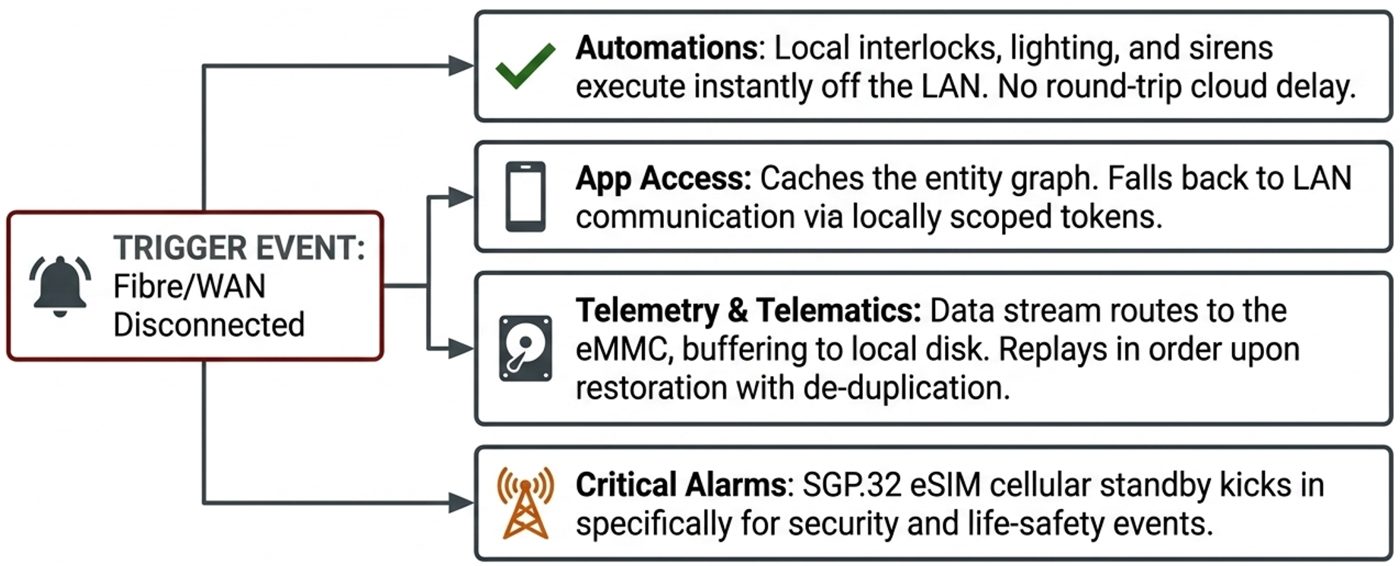
A remote site cannot page an engineer when the fibre drops. The gateway has to keep the site running, and the fleet has to know it happened.

Site survivability flow when the primary WAN disconnects: local automations keep executing off the LAN, telemetry buffers to local storage and replays in order with de-duplication, and SGP.32 eSIM cellular standby carries the alarms that cannot wait
Site survivability. When the primary WAN drops, on-site automations keep running off the LAN, telemetry buffers locally and replays in order, and SGP.32 cellular standby carries the events that cannot wait.
  • Link health monitored continuously; failover to cellular standby without operator intervention
  • SGP.32 eSIM profile steering: the operator relationship is a fleet decision, not a site visit
  • Steering and failover run as campaigns: canary sites first, waves after, rollback available
  • Site-level connectivity SLA reporting from the same console as device and OT health
Edge intelligence

AI inferencing on whatever the site's silicon can run

Models on the gateway or the sensor are fleet assets: deployed, versioned, monitored and rolled back with the same discipline as any other software on site.

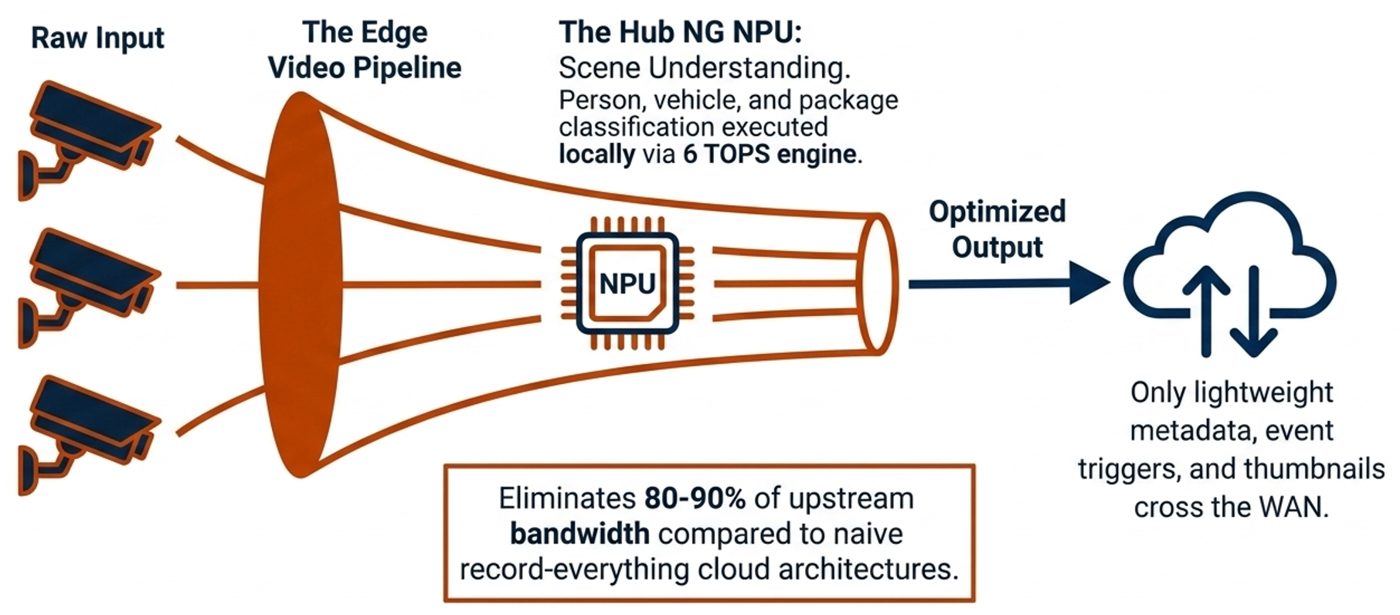
Edge AI pipeline at a remote site: video, vibration and water-quality sensors are classified locally, so only lightweight metadata, event triggers and thumbnails cross the WAN back to the platform
Inference where the sensor is. Classification and anomaly scoring run on-site; only metadata, events and thumbnails cross the WAN, cutting upstream bandwidth compared with record-everything cloud architectures.

Video

Person, vehicle, package

Perimeter and access classification on the gateway NPU for unattended sites, without a continuous video upload bill.

Vibration and acoustic

Machine health

Bearing and pump condition scored on-device, feeding predictive maintenance before a PLC alarm would have fired.

Water quality

Environmental

Turbidity, pH and flow anomaly detection at the sensor, ahead of a lab result days later.

Thermal and energy

Grid and building

Load and demand pattern inference on-site, correlated with grid-edge and building telemetry in the same console.

Integrations

Integrates with the systems you already run

Site data is only useful once it reaches the systems the business already trusts. Friendly bridges to them rather than asking you to replace them.

SCADA / PLC (Modbus, OPC UA, EtherNet/IP) ERP and enterprise apps Kafka streams and webhooks Azure IoT bridge AWS and Google Cloud bridges Hyperscale data lakes and analytics
Where it runs

Remote sites in the field
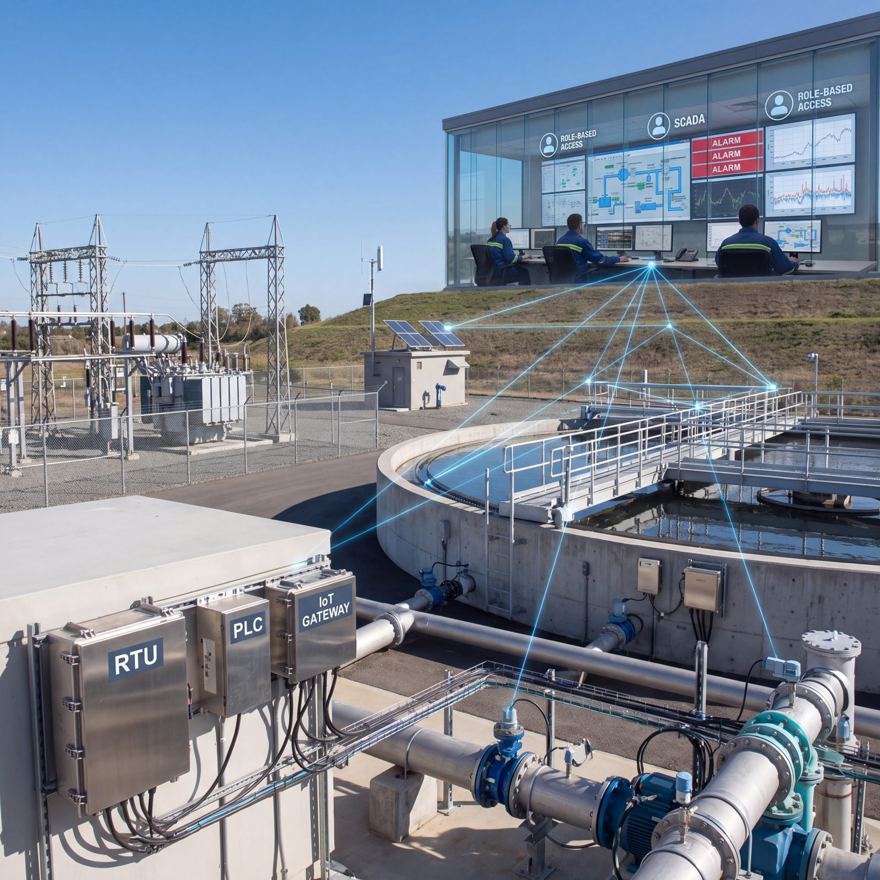
Industrial control room with SCADA screens bridged into the site fleet
Industrial

Plants with SCADA already running

PLCs and historians join the fleet through the gateway bridge, no control-loop changes required.
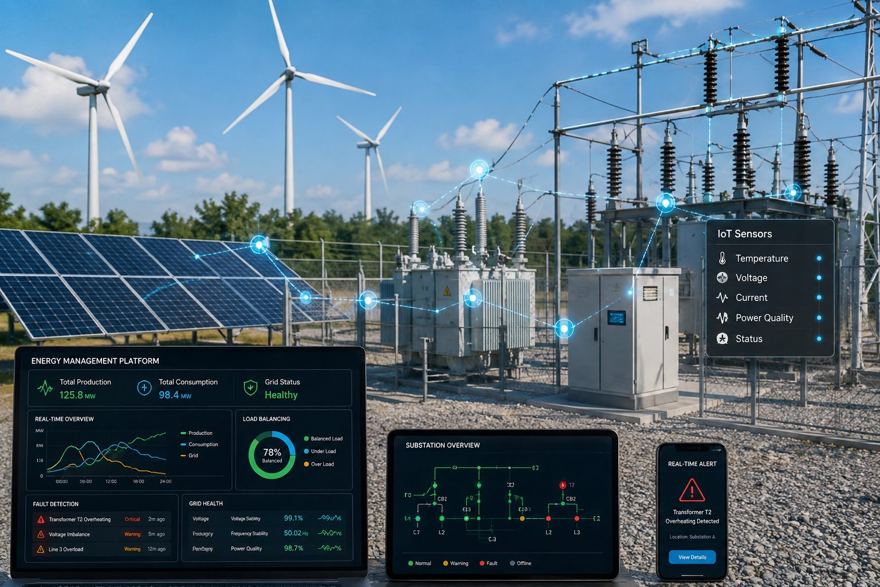
Substation edge sensors and renewables telemetry
Energy

Substations and grid edge

Failover assurance and campaign-grade updates for equipment nobody can afford to visit twice.
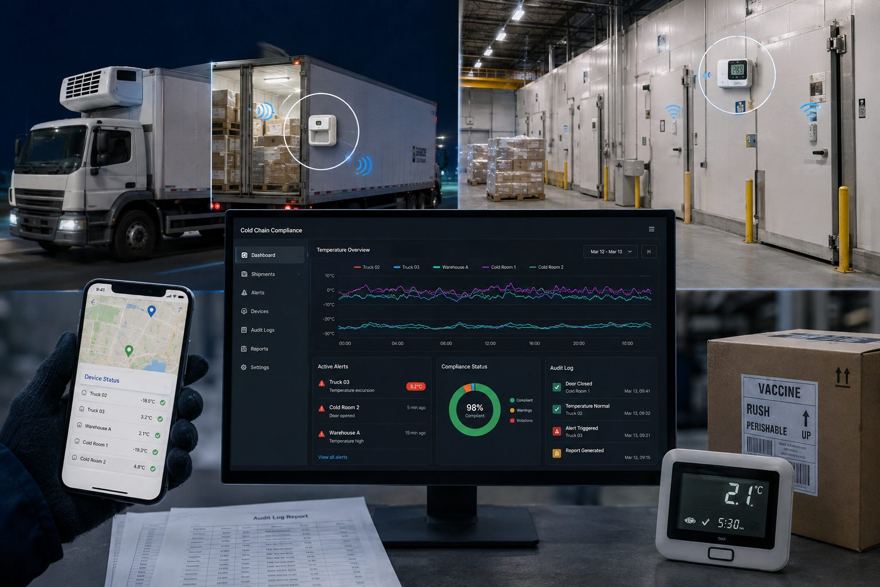
Cold-chain monitoring sensors on refrigerated logistics
Cold chain

Temperature-critical logistics

Coin-cell sensors on trailers and stores report continuously, with battery life measured in years.
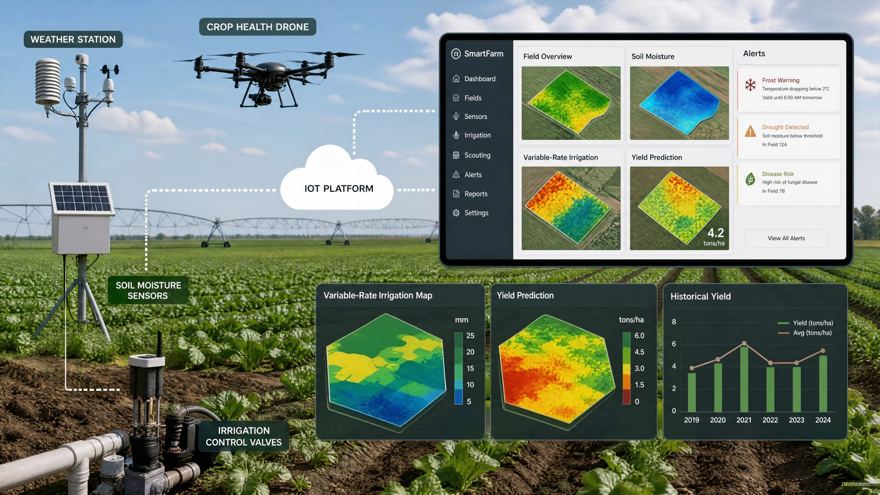
Agricultural site with irrigation and environmental sensors
Agriculture

Irrigation and field sensing

LoRaWAN sensors across hectares, one console instead of one app per vendor.
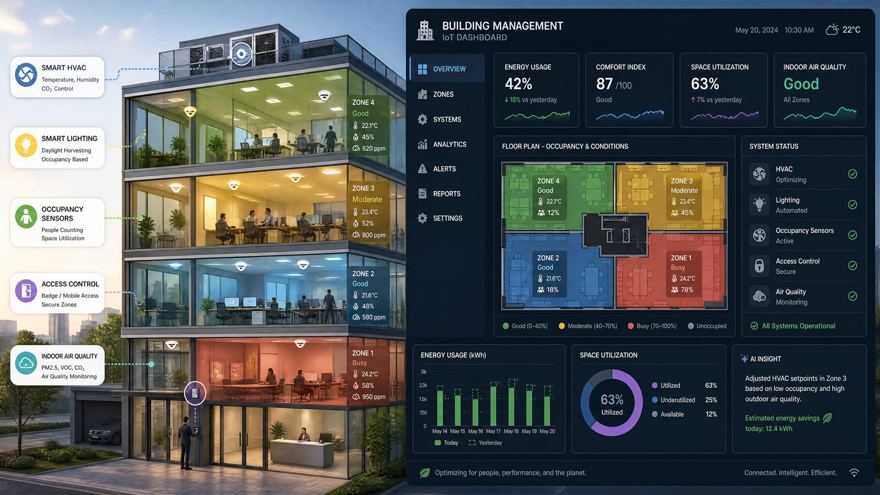
Smart building systems converging on an edge gateway
Buildings

Sites as fleet citizens

HVAC, occupancy and energy behind a site gateway, bridged into one operational view.
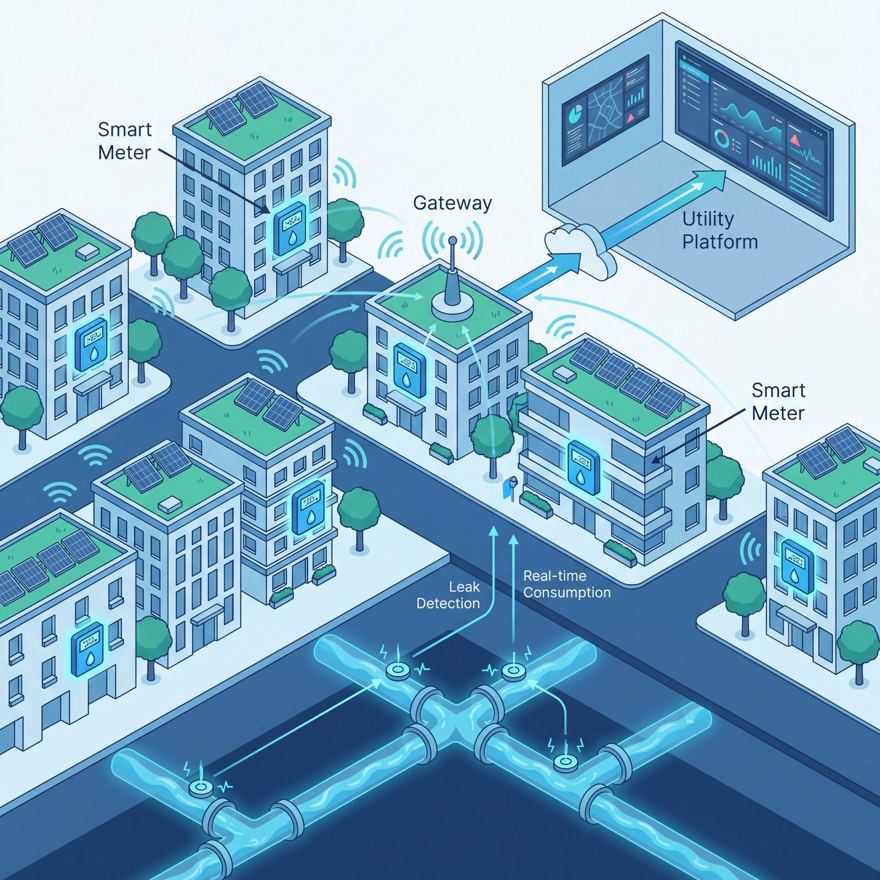
Municipal network operations centre covering distributed city infrastructure
Municipal

City and metro infrastructure

Water, lighting and metro-network sites operated from one municipal fleet view.

For utilities, integrators and industrial operators

Your sites, your SCADA, one fleet

Friendly Site Management is built for the estate that already has history: PLCs from three vendors, sensors bought over a decade, and a SCADA system nobody wants to touch. The platform bridges into it rather than asking you to replace it.

Utilities, system integrators and enterprises with distributed sites get zero-touch onboarding, predictive maintenance, WAN and eSIM failover, and edge AI inferencing behind one console, whether the site is a substation, a plant or an unattended field cabinet.

Honesty first: today the Site Management App is a design preview you can click through, pinned to live reference hardware and a simulated site fleet. That is exactly why now is the time to shape it as a design partner. UltraPRO, UltraMIN, the One-IoT platform and the Friendly IoT Protocol Tester underneath it are in production.

See the Site Management preview

A working session against the live demo fleet, plus the design-partner programme details.

Submissions route to Friendly's CRM. No newsletter, no drip by default.

Gateway, sensor, PLC. One operated site fleet.

Request the preview session